
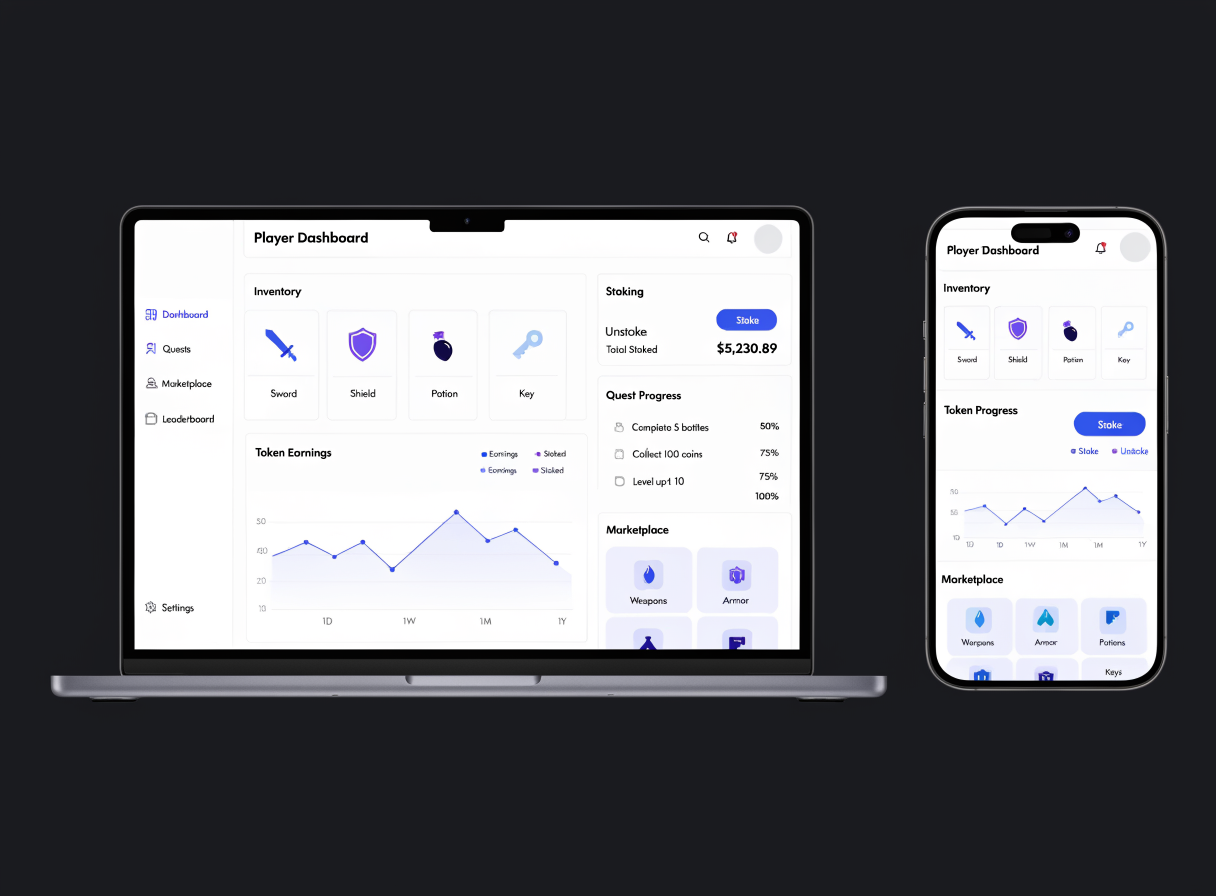
What Is an Enjin Clone Script?
An Enjin clone script is infrastructure that game studios build on rather than a game itself. It provides item contracts supporting both unique and stackable assets, SDKs so a studio can mint and transfer items from their own game code, and a marketplace where players trade them.
Your customer is the studio, not the player. Studios adopt infrastructure that does not require them to hire blockchain engineers, does not make their players pay gas, and does not break their existing game economy.
What You Receive
| Component | What It Covers |
|---|---|
| Item contracts | Semi-fungible standards supporting unique and stackable assets |
| Studio SDK | Client libraries for minting, transfer and inventory from game code |
| Gas abstraction | Sponsored transactions so players do not hold native tokens |
| Marketplace | Item listing, trading and discovery for players |
| Studio console | Item definition, supply control, analytics and payouts |
| Portability layer | Cross-game and cross-chain asset movement where scoped |
| Player wallets | Embedded custody so onboarding does not require a wallet |
| Source code | Contracts, SDKs, marketplace and infrastructure on delivery |
See working item infrastructure with your branding and a sample studio integration.
Get a Free Live DemoA Player Who Needs a Wallet and Gas Money Will Not Play
Game economies work because acquiring an item takes seconds. Blockchain item ownership breaks that if a player must install a wallet, buy native tokens, approve a transaction and wait for confirmation before receiving a sword.
So the infrastructure has to hide the chain almost entirely: embedded wallets created silently, gas sponsored by the studio, transactions batched and confirmed optimistically. The ownership guarantee stays real; the friction has to disappear.
Wallets created invisibly no seed phrase during onboarding, with upgrade to self-custody later.
Gas sponsored by the studio so players never hold a native token to play.
Transactions batched because per-item on-chain writes do not scale to game volume.
Optimistic confirmation the item appears immediately, settles behind the scenes.
Self-custody as an upgrade offered to players who want it, not forced on everyone.
Economy sinks designed because tradeable items with no sink inflate like any currency.
We build for a player who has never used a wallet and does not want to. If the ownership guarantee costs them a single extra step at onboarding, studios will not ship it.
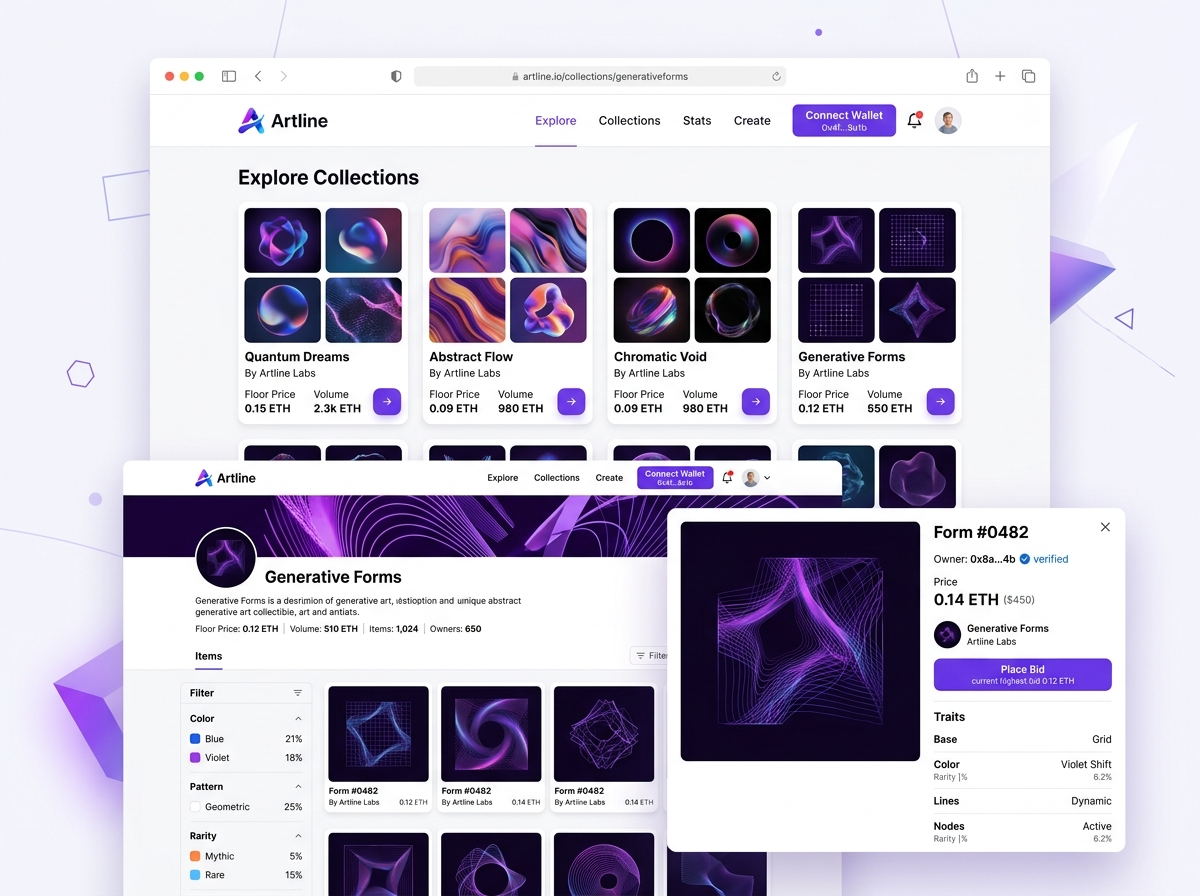
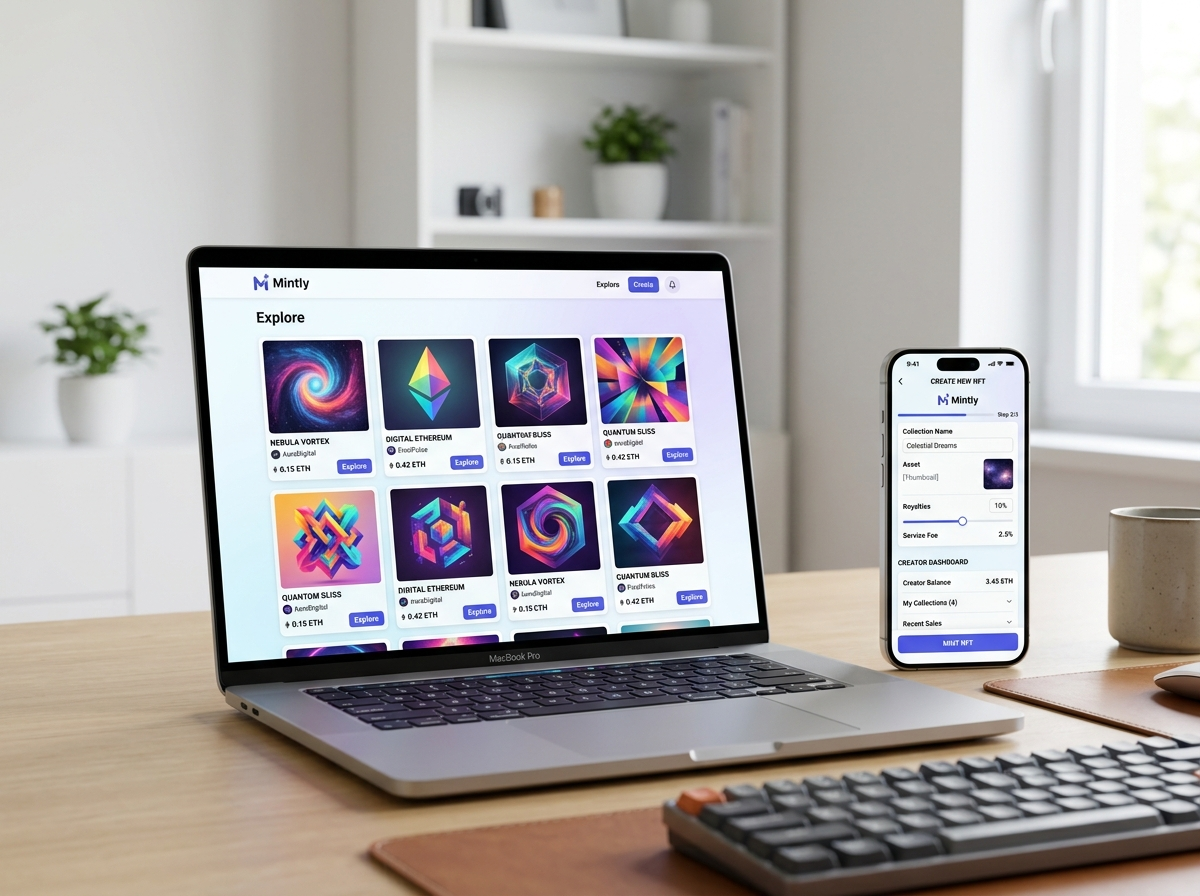
Surfaces This Scope Covers
Reference concepts for an on-chain build — swap, liquidity and position surfaces. Not screenshots of a delivered client protocol; audited deployments are shown on a call.
Core Features
Item Infrastructure
- Semi-fungible contracts for unique and stackable items
- Item definition with traits, rarity and supply caps
- Batch minting and transfer for game-scale volume
- Item upgrade, fusion and burn mechanics
- Supply control with studio-level permissions
- Metadata pinned permanently with immutable URIs
- Item provenance and edition tracking
Studio Integration
- SDKs for common game engines and backends
- REST and webhook APIs for server-authoritative games
- Sandbox environment for integration testing
- Gas sponsorship configuration per studio
- Item template library to speed onboarding
- Studio console for supply, analytics and payouts
Player Experience
- Embedded wallet created without a seed phrase
- Optional upgrade to self-custody
- Inventory view across games on the platform
- Marketplace listing and purchase in a few taps
- Gas-free transactions where sponsored
- Purchase with card or stablecoin where licensed
Economy and Safety
- Sink design so item supply does not inflate indefinitely
- Cross-game portability rules where scoped
- Anti-fraud and duplicate item detection
- Independent audit of item and marketplace contracts
- Monitoring on mint volume, trades and sink usage
- Studio-level rate limits and abuse controls
Mapped to a release plan
We will send a platform architecture, studio integration plan and economy model with a delivery timeline.
Request a Feature PlanHow Game Asset Infrastructure Is Put Together
The modules above map onto these layers. Each one ships with its own tests, documentation and runbook, so nothing arrives as a black box you inherit without an explanation.
Requests flow down, settlement and events flow back up. Every boundary carries logging, so a failure is traceable to a layer instead of guessed at.
Chains and Standards We Work With
Each deployment is a separate audit surface, not a redeploy. Gas economics, MEV exposure and bridge assumptions differ per chain, and a contract that is safe on one can be attackable on another.
How We Build Your Platform
Contracts and interface follow separate tracks with separate release gates, because one is permanent and the other is not.
Platform and studio scoping
Which studios, what item types, what integration effort is acceptable to them.
Output → platform specification with integration model
Economy and abstraction design
Sink design, gas sponsorship model and wallet abstraction approach.
Output → economy model with abstraction architecture
Contract and SDK build
Item contracts plus SDKs and APIs with sandbox environment.
Output → contracts and SDKs with integration documentation
Independent audit
Third-party review of item and marketplace contracts, remediation and retest.
Output → audit report with findings resolved
Launch and studio onboarding
Deployment, first studio integrations, monitoring and support runbooks.
Output → live platform with onboarded studios
Chains we deploy to
Development Timeline
| Scope | Timeline | Includes |
|---|---|---|
| White label item platform | 5 to 8 weeks | Rebranded platform, standard item types, one chain |
| Standard platform | 11 to 15 weeks | Custom items, SDKs, marketplace, gas abstraction, audit |
| Platform with portability | 4 to 7 months | Cross-game rules, cross-chain bridging, advanced economy |
| Multi-chain platform | 7 to 11 months | Several chains, many studios, full tooling and analytics |
What extends the timeline: independent audit of item and marketplace contracts; gas abstraction and account infrastructure, which is the work that makes adoption possible; SDK development per engine, since each is a separate integration; and economy modelling, which determines whether item supply stays healthy.
Revenue Models
| Model | How It Works |
|---|---|
| Asset minting fees | Charges to studios for issuing in-game items |
| Marketplace commission | A percentage of secondary item trades |
| Transaction fees | A cut of in-game asset transfers |
| SDK and platform licensing | Charges to studios integrating your infrastructure |
| Bridging fees | Margin on moving assets between chains or games |
| Premium studio tooling | Analytics, economy modelling and support tiers |
| Treasury and token capture | Fees routed to stakers or the platform treasury |
Every fee is public and comparable on-chain, so pricing has a hard competitive ceiling. We build fee parameters as governable values rather than constants so they can be tuned without redeployment.
Related services
Who This Is For
Giving several titles shared item infrastructure.
Providing native gaming infrastructure for their developers.
Offering item issuance as a service to studios.
Issuing tradeable items without building the stack themselves.
Making assets portable across experiences.
Issuing collectible and access items at scale.
Why Choose Coinsclone
Built for players without wallets
Embedded custody and sponsored gas, because friction kills adoption.
Studio integration made trivial
SDKs and sandbox first, since studios adopt on effort rather than price.
Batching for game volume
Because per-item on-chain writes do not scale to real gameplay.
Sinks designed with the economy
Tradeable items inflate like any currency without them.
Contracts independently audited
Item and marketplace paths reviewed before real value flows.
Full source code ownership
Contracts, SDKs, marketplace and infrastructure transfer on delivery.
What Our Clients Say
Operators who launched with us, in their own words. Hover to pause.













A members-only NFT marketplace for Digital Freemasonry
 Digital Free MasonryNFT marketplace · delivered and live
Next phase in progress: the ODFT Token and the MasonicVerse platform.
Working with Coinsclone has been one of the best professional experiences I have had in the blockchain industry.
From the very beginning of our NFT Marketplace project until its successful completion, the entire team demonstrated exceptional technical expertise, professionalism, patience, and commitment. Every stage of development was handled with great attention to detail, and every challenge we encountered was approached with a solution-oriented mindset.
Read the full client note
Our project was far from a standard NFT Marketplace. It included custom blockchain architecture, Polygon integration, ERC-721 and ERC-1155 standards, royalty implementation, token-gated access through Masonic Passport, multiple payment methods, marketplace customization, advanced testing, and many unique business requirements. Throughout the entire process, the team consistently delivered high-quality work while maintaining clear communication, transparency, and a strong commitment to excellence.
I would especially like to express my sincere appreciation to Mr. Jeeva, Mr. Bala, Mr. Saravanan, Mr. Veeramani, Mr. Akshay, and the entire development team for their outstanding support, professionalism, responsiveness, and dedication throughout the project. Their technical expertise, patience, and willingness to understand even the most complex business requirements gave us complete confidence during every phase of development.
What impressed me the most was not only their excellent blockchain development skills, but also their ability to understand our vision and transform it into a secure, scalable, and highly professional NFT Marketplace.
For me, Coinsclone is not simply a software development company — they are a trusted long-term technology partner. After successfully completing our NFT Marketplace, we are now preparing to continue our collaboration on the next major phase of the Digital Freemasonry ecosystem, including the development of the ODFT Token and the future MasonicVerse platform.
I highly recommend Coinsclone to anyone looking for a reliable, experienced, and highly professional blockchain development company. They have earned my complete trust and respect, and I sincerely look forward to working with them again on future projects.
Start Your Game Asset Project
Tell us your studio pipeline and item types and we will respond with a platform architecture and delivery timeline.
- Built for players who have never used a wallet
- Studio integration effort treated as the key metric
- NDA signed before technical discussion
Request received
A solution architect will reply within one business day with a scoped proposal and demo link.
Enjin Clone Script: Frequently Asked Questions
What is an Enjin clone script?
Infrastructure that game studios build on: item contracts supporting unique and stackable assets, SDKs for minting and transfer from game code, and a marketplace where players trade items.
Who is the customer for this platform?
Game studios, not players. Studios adopt infrastructure that does not require blockchain engineers, does not make players pay gas, and does not break their existing economy.
Why do players not need a wallet?
Because requiring one loses most of them. Wallets are created invisibly during onboarding, with self-custody offered later as an upgrade for players who want it.
How do players avoid paying gas?
The studio sponsors transactions through account abstraction, so players never hold a native token. Without this, item ownership adds a purchase step before gameplay.
Why does batching matter?
Because game economies generate far more item events than per-transaction on-chain writes can absorb economically. Batching plus optimistic confirmation keeps the experience instant.
What is a semi-fungible item?
An item type where many identical copies exist, like a potion, alongside unique items like a named weapon. ERC1155 handles both in one contract, which suits game inventories.
Can items move between games?
Where the studios agree rules for it, yes. The technical portability is straightforward; the design question is what a sword from one game means in another, and that needs deciding first.
Do item economies need sinks?
Yes. Tradeable items inflate exactly like a currency if nothing removes them. Upgrade costs, fusion mechanics and consumption on use are the usual sinks.
How hard is studio integration?
That is the metric we optimise. SDKs for common engines, REST APIs for server-authoritative games, and a sandbox environment so a studio can integrate before committing.
How does the platform make money?
Minting fees to studios, marketplace commission, transaction fees, SDK licensing, bridging fees, premium studio tooling and treasury or token capture.
How long does it take to build?
A white label platform takes 5 to 8 weeks. A standard build takes 11 to 15 weeks. Adding portability takes 4 to 7 months, and multi-chain 7 to 11 months.
Will we own the platform?
Yes. Item contracts, SDKs, marketplace, studio console and infrastructure configuration transfer on delivery under your own keys and accounts.
Estimate Your Build
Pick a scope and the extras you need. On a protocol build the audit and economic-modelling lines are the ones that move the timeline, and neither compresses safely.
{{ estSummary }}
Ranges assume decisions arrive on time. Licensing, banking and third-party audits run on their own schedules and we plan around them rather than inside them.
Get This Scoped ProperlyReady to Build Game Asset Infrastructure?
Share your studio pipeline and item types and receive a platform architecture, economy model and delivery timeline.