
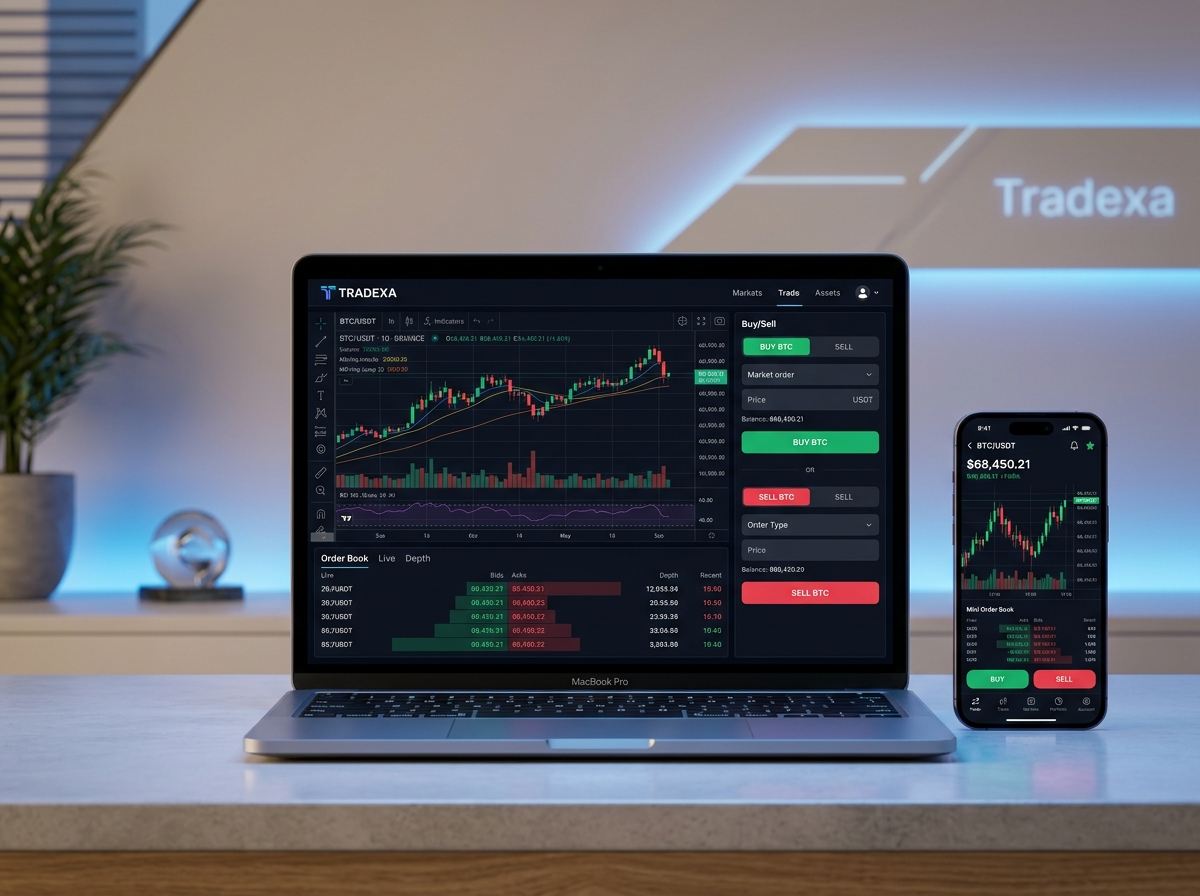
What Is a Crypto Exchange Clone Script?
A crypto exchange clone script is a pre-built, tested exchange platform: order book and matching engine, wallet and custody layer, user accounts with tiered verification, admin console, and the compliance and reporting tooling an exchange needs. It is configured to your branding, pairs, fee model and jurisdiction rather than written from scratch.
The word clone causes most of the confusion in this market. You are licensing working software, not copying another company brand, interface or trademarks. What you get is the architecture and months of engineering time; what you still have to build is a business.
What You Receive
| Component | What It Covers |
|---|---|
| Matching engine | Order book with market, limit and stop orders, tested under load |
| Custody layer | Hot and cold wallet architecture with multi-approval withdrawals |
| User system | Registration, tiered KYC, device management and two-factor authentication |
| Trading interface | Web and mobile trading with charting and order management |
| Admin console | Fees, pairs, limits, users, treasury and reporting controls |
| Compliance stack | KYC, AML monitoring, sanctions screening and reporting exports |
| Liquidity integration | Market maker and aggregated liquidity connections |
| Source code | Engine, apps, backend and infrastructure transfer on delivery |
See a working exchange with your branding, pairs and fee structure before committing to anything.
Get a Free Live DemoA Clone Script Copies Software, Not a Business
The software is the least uncertain part of launching an exchange. What a script cannot give you is an order book with depth, a banking relationship, a licence in your target market, or users who trust you with custody of their assets.
Exchanges that fail after launch almost never fail because the matching engine was inadequate. They fail because nobody could trade at a reasonable price, fiat deposits stopped working, or a regulator asked a question they could not answer. Those are the four things worth planning before writing a cheque for software.
Liquidity planned before launch market makers or aggregated liquidity arranged, since an empty book converts nobody.
Licensing scoped with counsel the jurisdictions you can serve identified before you market to them.
Banking route identified early fiat rails are the longest lead time in any exchange project.
Custody architecture designed hot, warm and cold tiers with approval controls, not a single wallet.
Security audited independently because an exchange is attacked continuously from day one.
Operations staffed support, treasury and compliance roles defined before users arrive.
We will tell you what the software does not solve. A clone script compresses the engineering timeline from months to weeks; liquidity, licensing and banking still take exactly as long as they take.
Surfaces This Scope Covers
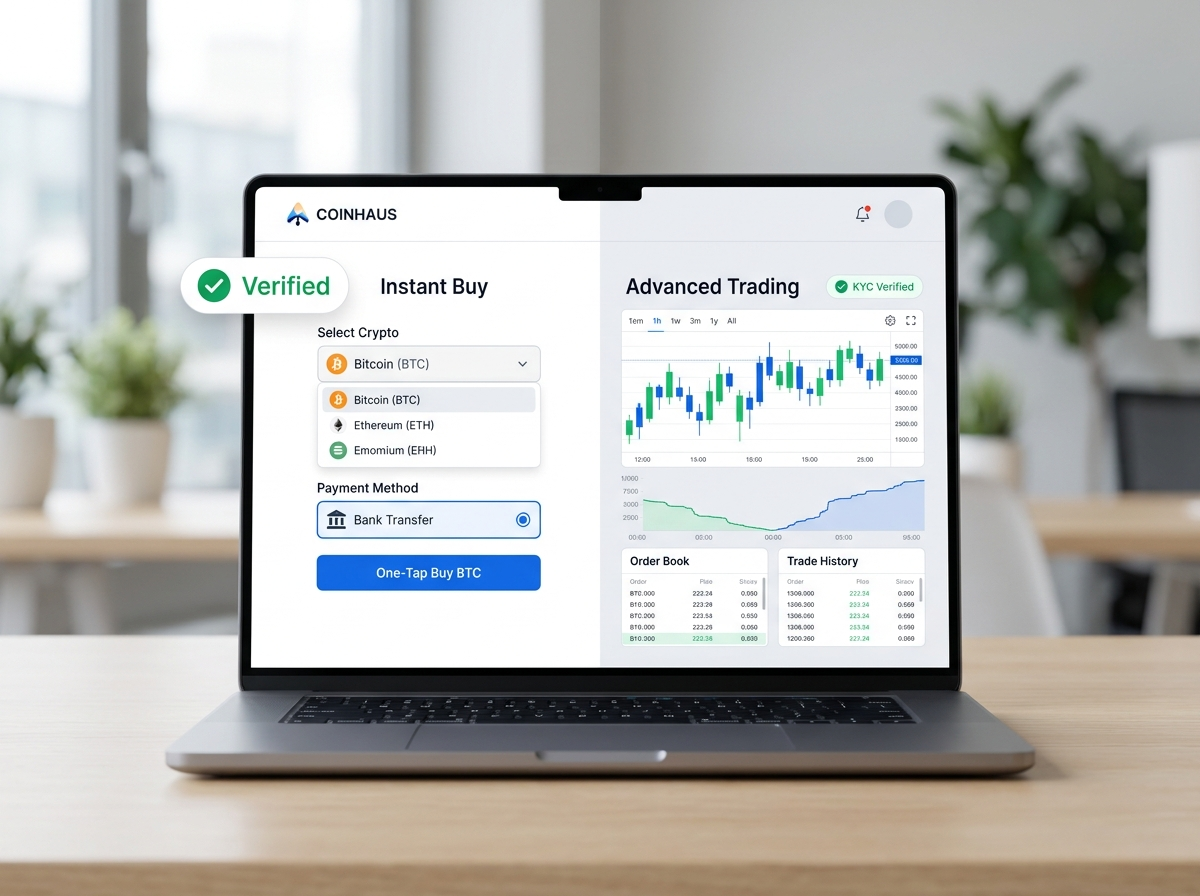
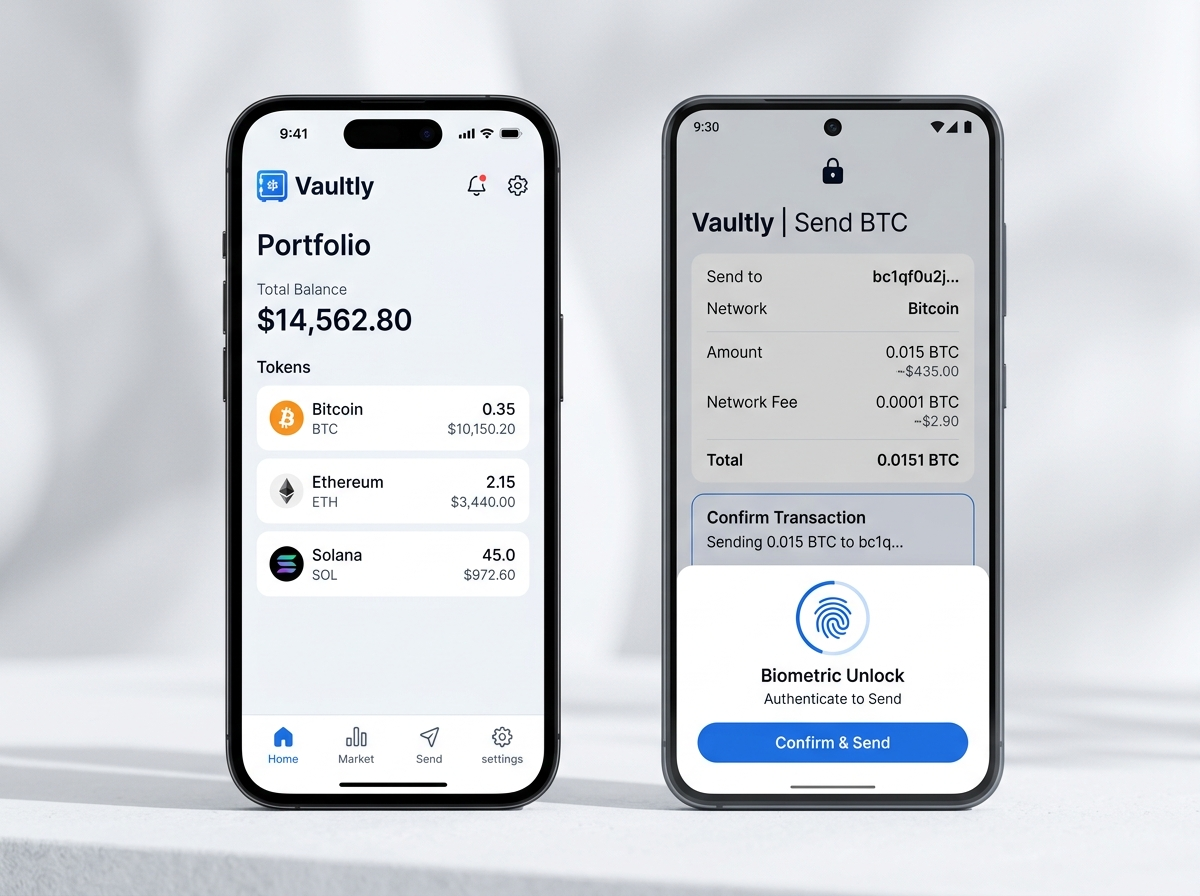
Reference concepts for an exchange build — the trading, compliance and account surfaces a venue like this needs. Not screenshots of a delivered client platform; we show working builds under NDA on a call.
Core Features
Trading
- Spot order book with market, limit and stop orders
- Optional margin and perpetual futures modules
- Advanced charting with indicators and drawing tools
- Instant buy and sell flow for beginners
- Trading APIs with REST and WebSocket access
- Trading bots and copy trading modules
- P2P trading module with escrow where required
Custody and Payments
- Hot, warm and cold wallet architecture
- Multi-approval withdrawal workflow with limits
- Multi-chain deposit detection with confirmation policies
- Fiat on-ramp and off-ramp integrations
- Stablecoin settlement options
- Proof-of-reserves capability
- Treasury dashboards and reconciliation reporting
Users and Compliance
- Tiered KYC with document and liveness verification
- AML transaction monitoring and sanctions screening
- Travel rule support where required
- Two-factor authentication, device and session management
- Anti-phishing codes and withdrawal address whitelisting
- Geo-fencing and product restriction by jurisdiction
- Regulator reporting exports and audit logging
Operations and Growth
- Admin console for pairs, fees, limits and users
- Market surveillance for wash trading and manipulation
- Referral, affiliate and fee tier programmes
- Staking and earn modules with documented yield sourcing
- Support tooling with per-order and per-transaction traces
- Analytics on volume, liquidity, conversion and retention
Mapped to a release plan
We will send a prioritized launch plan covering products, liquidity, compliance and delivery timeline.
Request a Feature PlanHow Crypto Exchange Clone Script Is Put Together
The modules above map onto these layers. Each one ships with its own tests, documentation and runbook, so nothing arrives as a black box you inherit without an explanation.
Requests flow down, settlement and events flow back up. Every boundary carries logging, so a failure is traceable to a layer instead of guessed at.
Chains and Assets We Work With
Listing an asset is not a configuration toggle. Each network needs its own node infrastructure, confirmation policy, deposit detection and withdrawal signing, and each one you add extends the security surface your treasury has to cover.
How We Build Your Exchange
Compliance and liquidity are scoped first, because they determine what the platform is allowed to do and whether anyone can trade on it.
Model and market scoping
Products, pairs, target regions, fee model and customer segments.
Output → platform specification and launch plan
Compliance scoping with your counsel
Licensing route, verification tiers, restricted products and reporting duties.
Output → jurisdiction and product restriction matrix
Configuration and development
Branding, pairs, engine tuning, custody setup and integrations.
Output → staging exchange for your review
Security audit and liquidity setup
Penetration testing, custody procedures and market maker onboarding.
Output → audit report and liquidity arrangements in place
Launch and operations
Deployment, support and treasury runbooks, monitoring and staged rollout.
Output → live exchange with incident and treasury runbooks
Modules available
Development Timeline
| Scope | Timeline | Includes |
|---|---|---|
| White label exchange | 4 to 6 weeks | Rebranded platform, standard pairs, core KYC |
| Standard custom exchange | 10 to 14 weeks | Custom engine tuning, fiat rails, apps, compliance |
| Exchange with derivatives | 5 to 8 months | Margin, perpetuals, risk engine, surveillance |
| Institutional platform | 8 to 14 months | FIX APIs, custody tiers, OTC desk, multi-region |
What extends the timeline: licensing, which runs on regulator timelines; banking partner onboarding for fiat rails; liquidity and market maker arrangements; and independent security auditing, which should never be compressed on a platform holding custody.
Revenue Models
| Model | How It Works |
|---|---|
| Trading fees | Maker and taker fees with volume tiers |
| Withdrawal fees | Margin on network transaction costs |
| Fiat funding fees | Charges on deposits and withdrawals |
| Spread on instant buy | Margin on the simplified retail flow |
| Listing fees | Charges for new token listings |
| Staking commission | A share of staking rewards routed through the exchange |
| Premium and API tiers | Advanced data, higher limits and dedicated infrastructure |
Exchange revenue is a function of volume, and volume is a function of liquidity. Fee schedules matter far less than whether a trader can execute at a fair price on your book.
Related services
Who This Is For
Launching an exchange without building infrastructure from scratch.
Serving a market global venues underserve or restrict.
Adding crypto trading to an existing client base.
Extending existing rails into trading.
Monetising an audience with a trading venue.
Building a venue with professional APIs and custody tiers.
Why Choose Coinsclone
Honest about what software solves
You get months of engineering; liquidity, licensing and banking remain your work and we plan around them.
Custody architected in tiers
Hot, warm and cold with approval workflows, because a single-wallet exchange is a single point of total loss.
Compliance built in, not bolted on
KYC tiers, AML monitoring, geo-fencing and reporting from the start.
Independently audited
Penetration testing and code review before launch, since exchanges are attacked continuously.
Liquidity arranged before launch
Market maker or aggregated liquidity in place, so your first users can actually trade.
Full source code ownership
Engine, apps, backend and infrastructure transfer to you on delivery.
What Our Clients Say
Operators who launched with us, in their own words. Hover to pause.












A members-only NFT marketplace for Digital Freemasonry
 Digital Free MasonryNFT marketplace · delivered and live
Next phase in progress: the ODFT Token and the MasonicVerse platform.
Working with Coinsclone has been one of the best professional experiences I have had in the blockchain industry.
From the very beginning of our NFT Marketplace project until its successful completion, the entire team demonstrated exceptional technical expertise, professionalism, patience, and commitment. Every stage of development was handled with great attention to detail, and every challenge we encountered was approached with a solution-oriented mindset.
Read the full client note
Our project was far from a standard NFT Marketplace. It included custom blockchain architecture, Polygon integration, ERC-721 and ERC-1155 standards, royalty implementation, token-gated access through Masonic Passport, multiple payment methods, marketplace customization, advanced testing, and many unique business requirements. Throughout the entire process, the team consistently delivered high-quality work while maintaining clear communication, transparency, and a strong commitment to excellence.
I would especially like to express my sincere appreciation to Mr. Jeeva, Mr. Bala, Mr. Saravanan, Mr. Veeramani, Mr. Akshay, and the entire development team for their outstanding support, professionalism, responsiveness, and dedication throughout the project. Their technical expertise, patience, and willingness to understand even the most complex business requirements gave us complete confidence during every phase of development.
What impressed me the most was not only their excellent blockchain development skills, but also their ability to understand our vision and transform it into a secure, scalable, and highly professional NFT Marketplace.
For me, Coinsclone is not simply a software development company — they are a trusted long-term technology partner. After successfully completing our NFT Marketplace, we are now preparing to continue our collaboration on the next major phase of the Digital Freemasonry ecosystem, including the development of the ODFT Token and the future MasonicVerse platform.
I highly recommend Coinsclone to anyone looking for a reliable, experienced, and highly professional blockchain development company. They have earned my complete trust and respect, and I sincerely look forward to working with them again on future projects.
Start Your Exchange Project
Tell us your model and target regions and we will respond with a scoped proposal covering products, compliance and delivery timeline.
- Working exchange demo with your branding applied
- Liquidity and compliance requirements mapped to your market
- NDA signed before technical discussion
Request received
A solution architect will reply within one business day with a scoped proposal and demo link.
Frequently Asked Questions
What is a crypto exchange clone script?
A pre-built, tested exchange platform including matching engine, custody layer, user accounts with tiered KYC, admin console and compliance tooling, configured to your branding, pairs, fees and jurisdiction rather than written from scratch.
Is a clone script a copy of another exchange?
No. You license working software with a proven architecture. You do not receive another company brand, trademarks or proprietary interface, and building a lookalike of a specific brand is neither offered nor advisable.
What does a clone script not give me?
Liquidity, a licence, a banking relationship or users. Those are the four things that actually decide whether an exchange succeeds, and none of them is a software problem.
How long does it take to launch?
A white label exchange launches in 4 to 6 weeks. A standard custom exchange takes 10 to 14 weeks. Adding derivatives takes 5 to 8 months, and an institutional platform takes 8 to 14 months.
Do I need a licence to operate an exchange?
In most jurisdictions yes, and requirements vary widely by country and by whether you handle fiat. Your counsel determines the route; we implement the verification, restriction and reporting their advice requires.
How is liquidity handled at launch?
Through market maker agreements, aggregated liquidity from other venues, or both. An exchange launching with an empty order book converts almost no users, so this is arranged before go-live rather than after.
How are customer assets custodied?
In tiers: a hot wallet sized to expected withdrawals, a warm operational tier and a cold reserve requiring multi-approval, with withdrawal limits, address whitelisting and four-eyes controls on every movement.
Can the exchange support fiat deposits?
Yes, where you hold banking or payment partner relationships. Fiat rails are typically the longest lead time in an exchange project, so we scope them at the start rather than treating them as an integration task.
Which modules can be included?
Spot, margin, perpetuals, P2P, OTC desk, staking, launchpad, copy trading, fiat rails and mobile apps. We recommend launching with the smallest set that serves your market and adding from there.
How does an exchange make money?
Trading fees, withdrawal fees, fiat funding fees, spread on the instant buy flow, listing fees, staking commission and premium API tiers. All of it scales with volume, which scales with liquidity.
Is the platform audited?
We coordinate independent penetration testing and code review before launch. An exchange holding customer custody is attacked continuously from day one, so this is not an optional step.
Will I own the source code?
Yes. Matching engine, apps, backend and infrastructure transfer to you on delivery, with no licensing dependency on Coinsclone.
Estimate Your Build
Pick a scope and the extras you actually need. Ranges reflect engine, custody and compliance work — the three lines that decide when an exchange can legally take a deposit.
{{ estSummary }}
Ranges assume decisions arrive on time. Licensing, banking and third-party audits run on their own schedules and we plan around them rather than inside them.
Get This Scoped ProperlyReady to Launch Your Exchange?
Share your model, products and target regions and receive a scoped proposal covering platform, compliance, liquidity and delivery timeline.