
The B2B blockchain development company
behind 350+ live platforms
A blockchain development company for startups, trading firms, fintechs and financial institutions: we build exchanges, wallets, DEXs, tokenization platforms and payment rails, with custody, compliance and liquidity treated as architecture rather than features added later. Audited before launch. Yours outright on delivery.





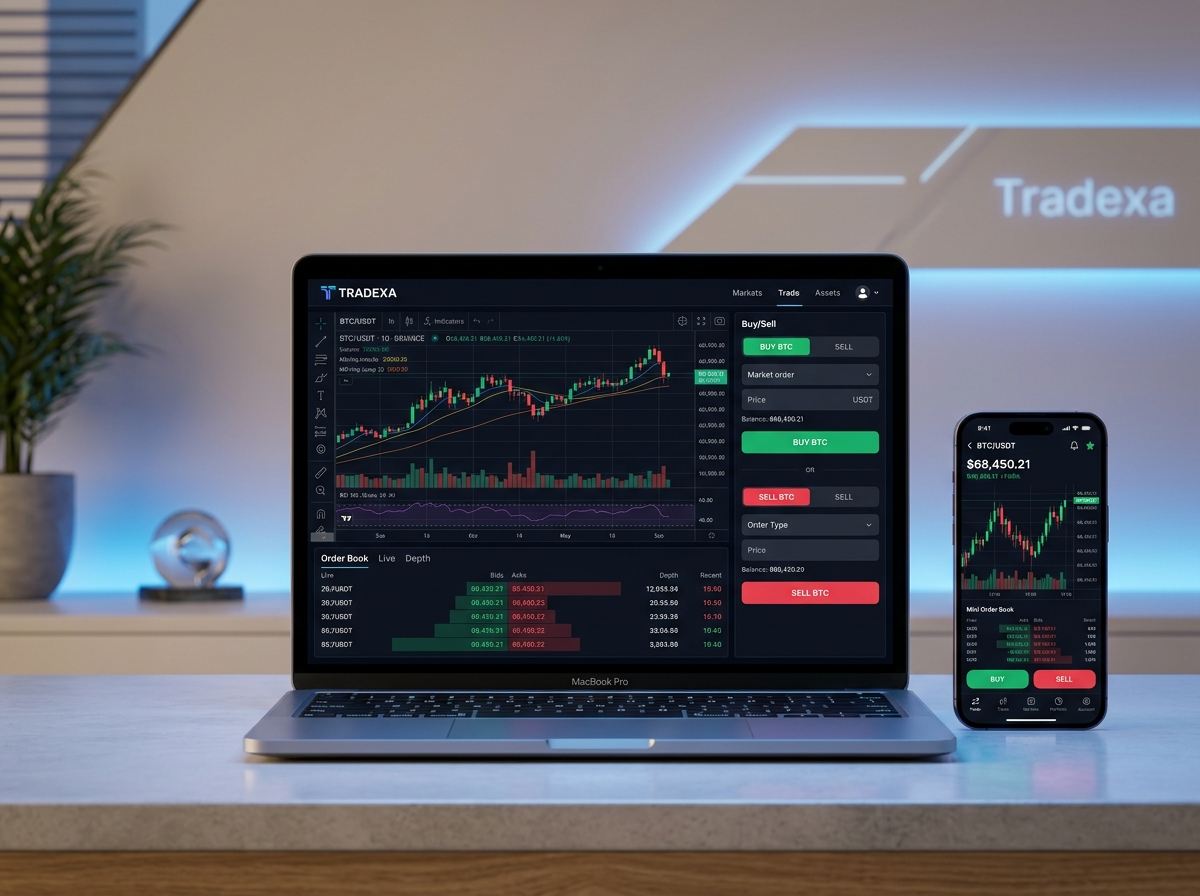
Blockchain Development Services We Deliver
A centralised venue is a custody business with a matching engine attached. We build both halves — engine, hot/warm/cold custody, KYC tiers, surveillance — and arrange liquidity before you open.
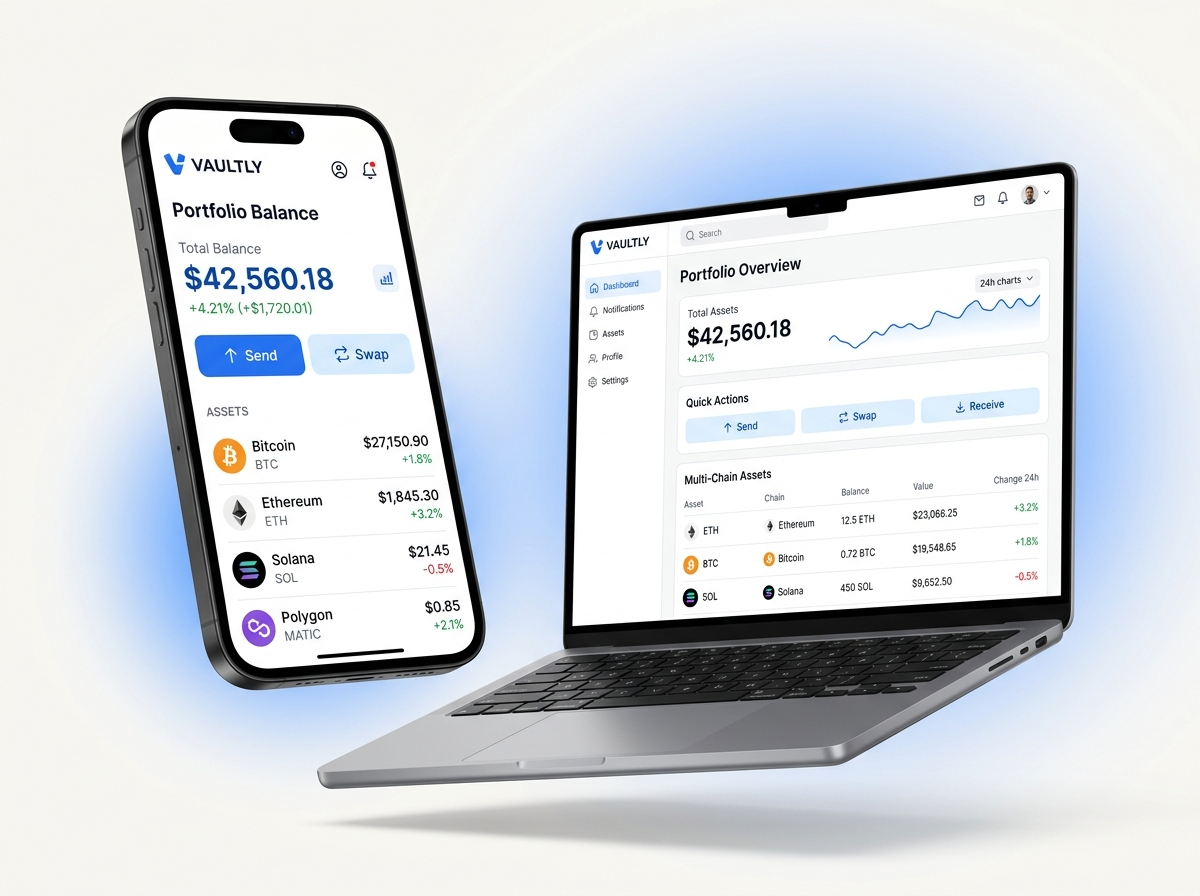
Wallets are judged on the day something goes wrong. We design key handling, recovery and approval warnings for that day — on-device keys, smart accounts, honest expectations at setup.
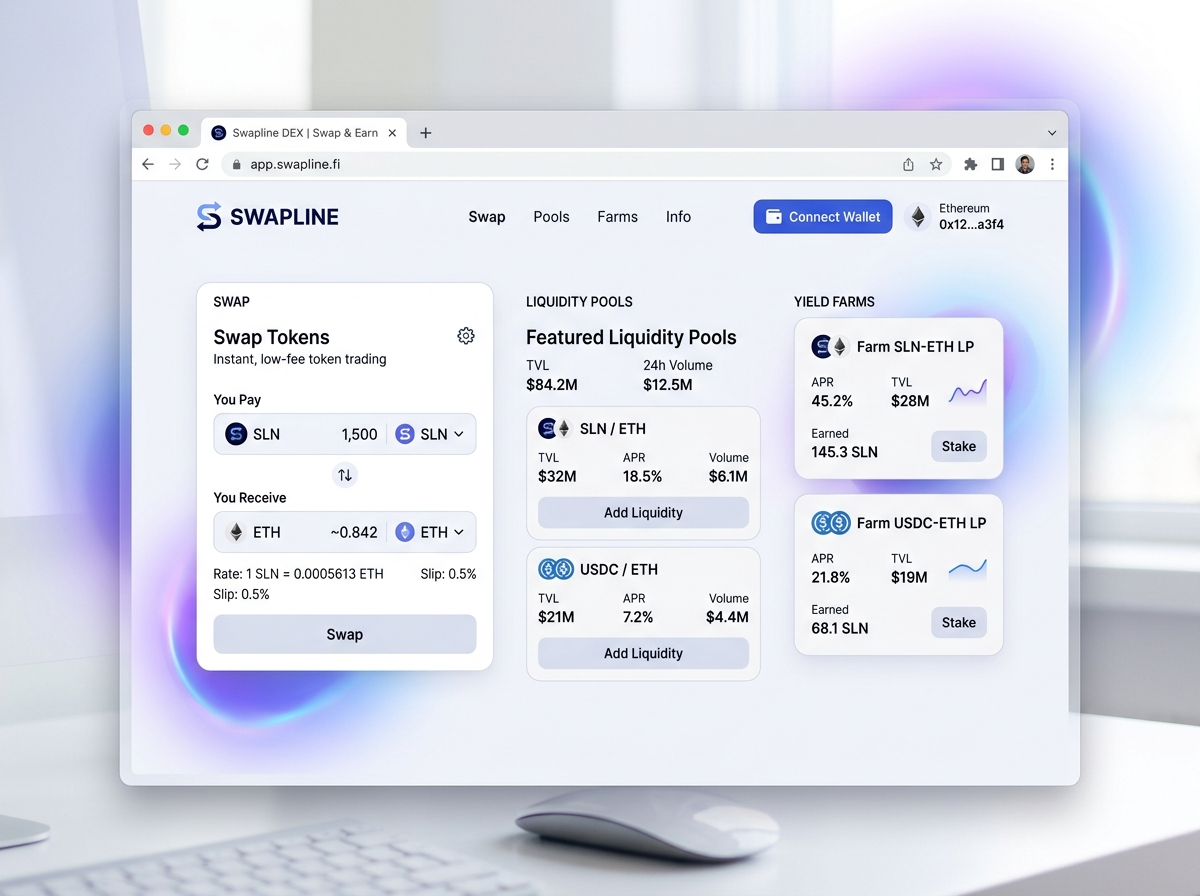
Most DeFi losses are economic, not technical — the code did what it was written to do. We model your protocol adversarially first: flash loans, oracle manipulation, thin-liquidity attacks.
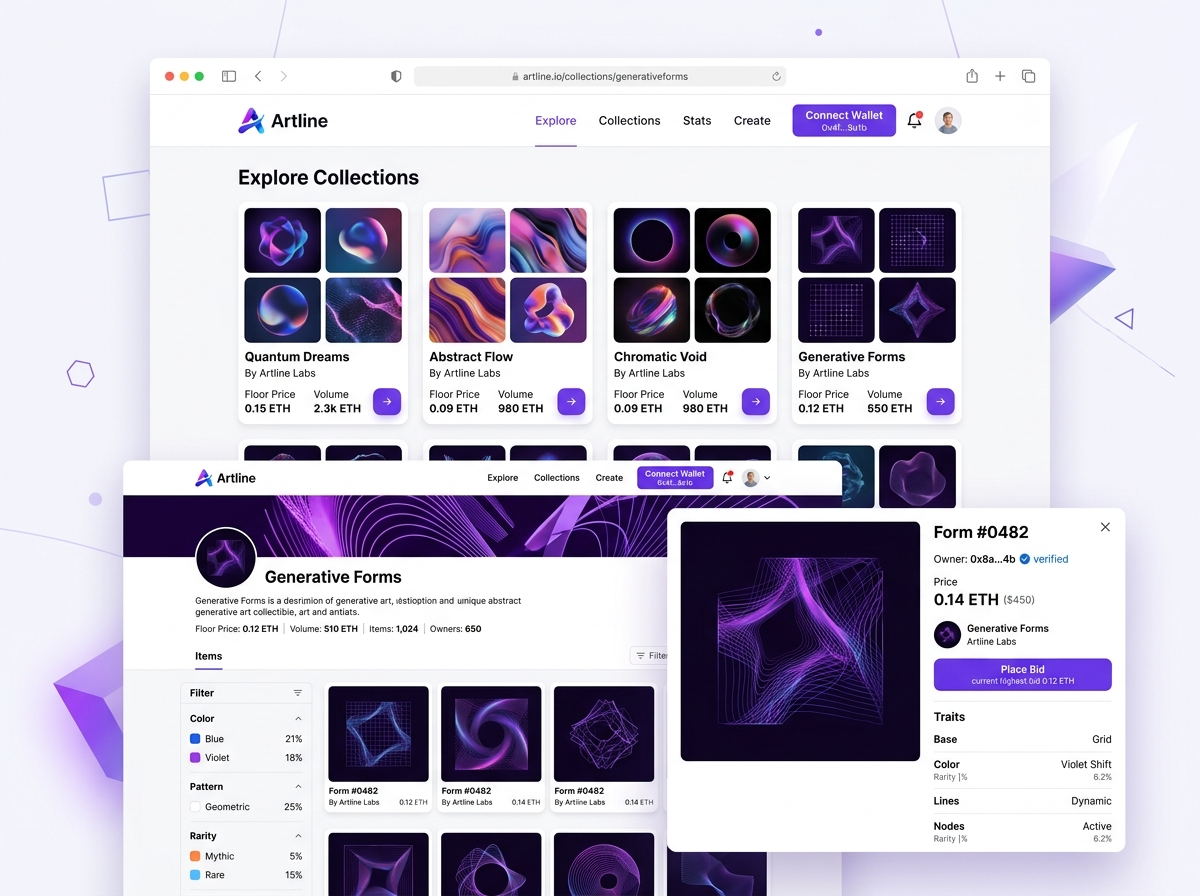
The mint is one day; the collection has to live afterwards. Permanent metadata, provenance committed before minting, and plagiarism detection at mint rather than after a complaint.
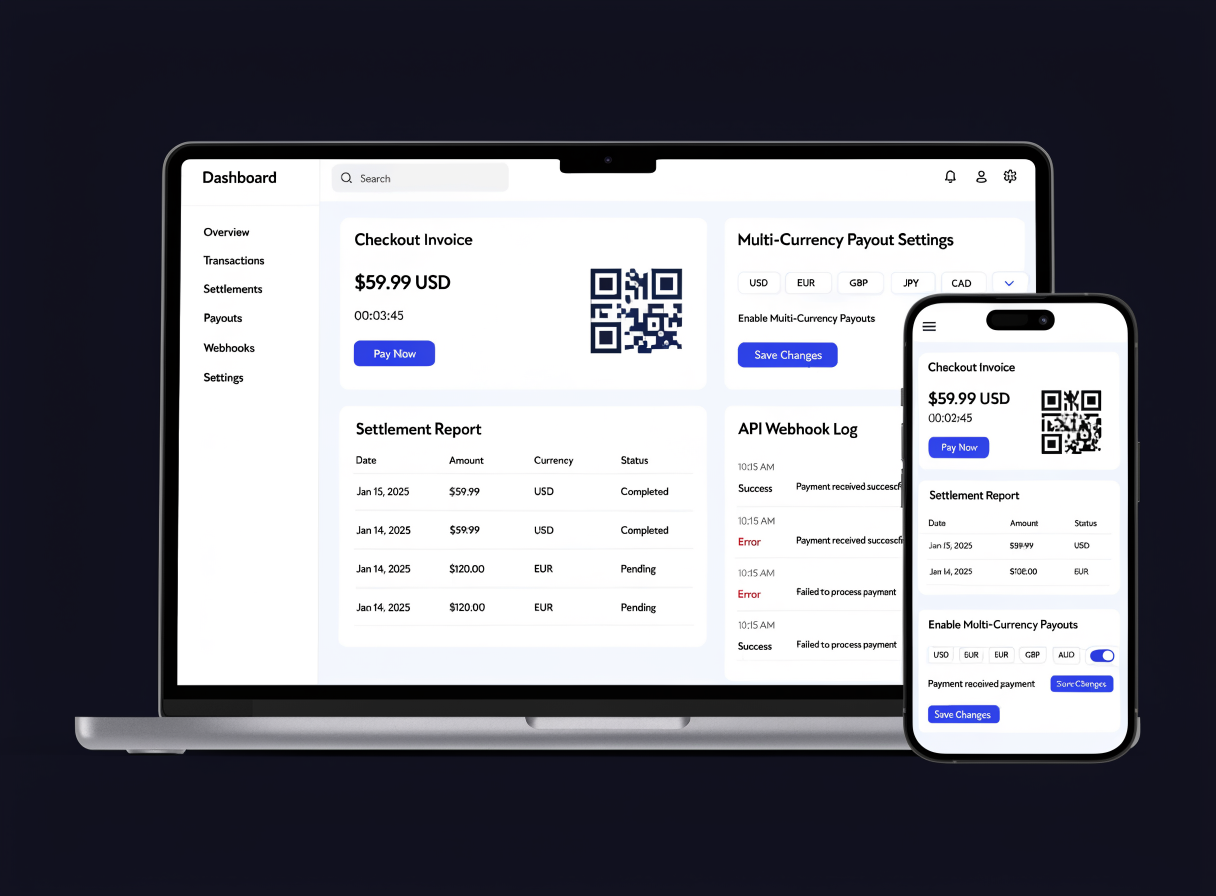
Merchants judge a gateway on whether money arrives in their bank account. Confirmation policy, idempotent webhooks and reconciliation that survives an audit — plus plugins that keep working.
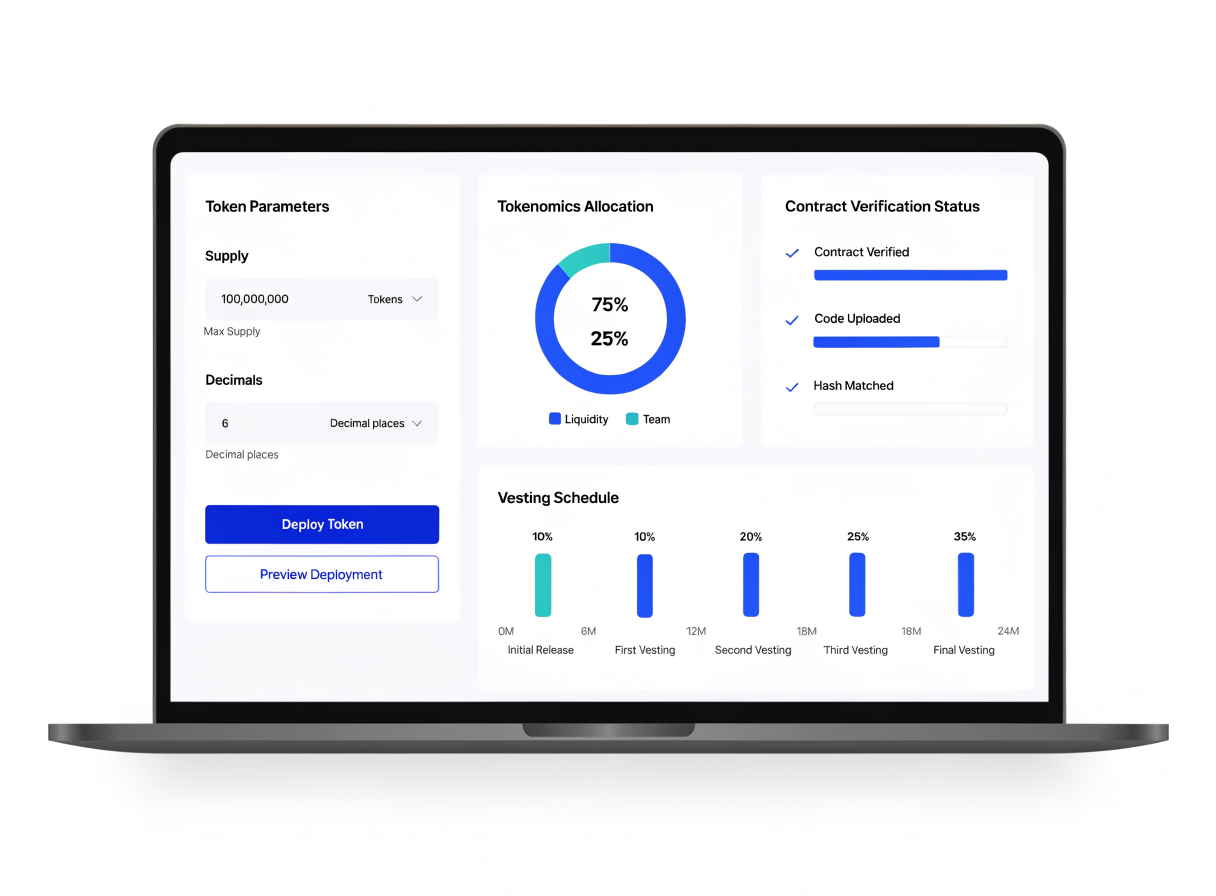
Token failures are distribution failures. Unlocks modelled against realistic liquidity, a demand mechanism that is not speculation, and keys handed to your own multisig with timelocks.
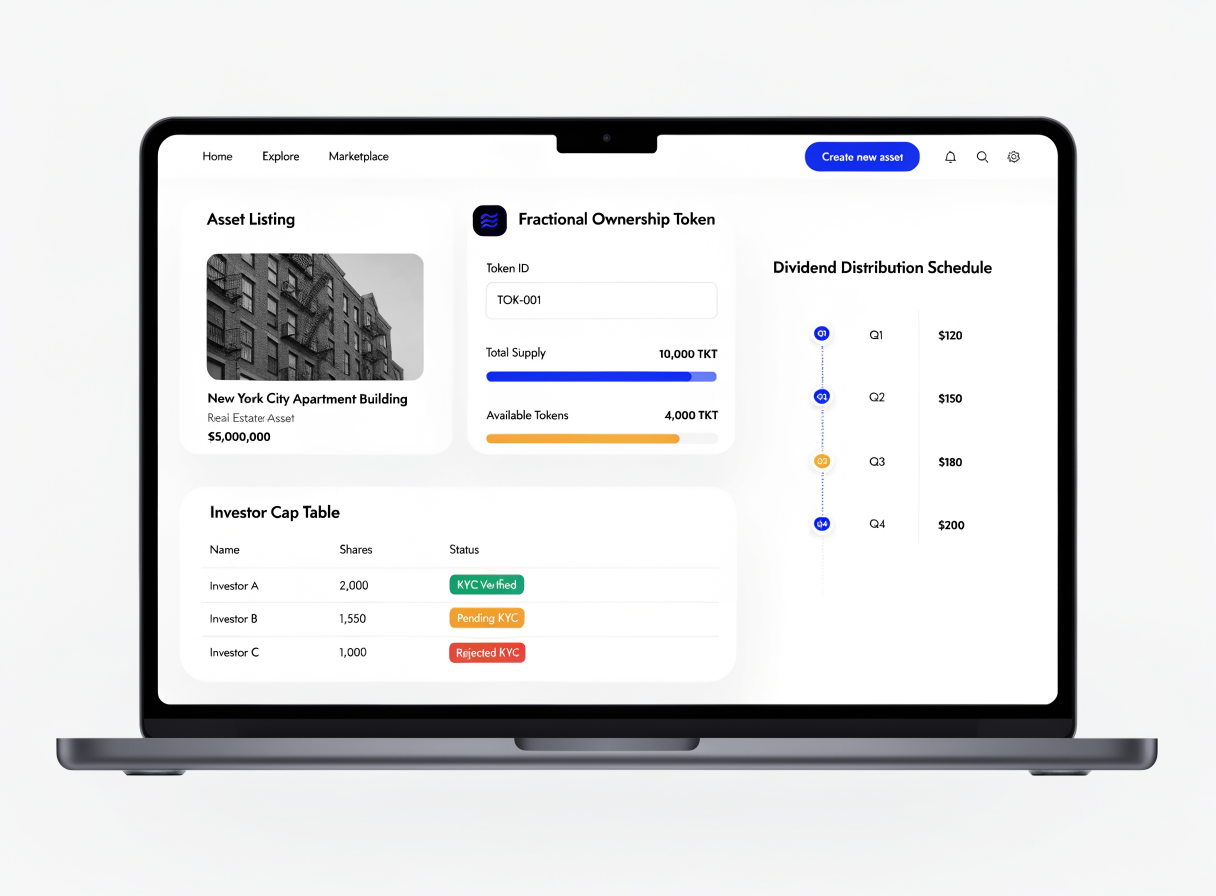
The chain cannot verify the asset. Permissioned contracts that enforce the legal structure, attestation at a cadence matching activity, and a redemption path tested before launch.
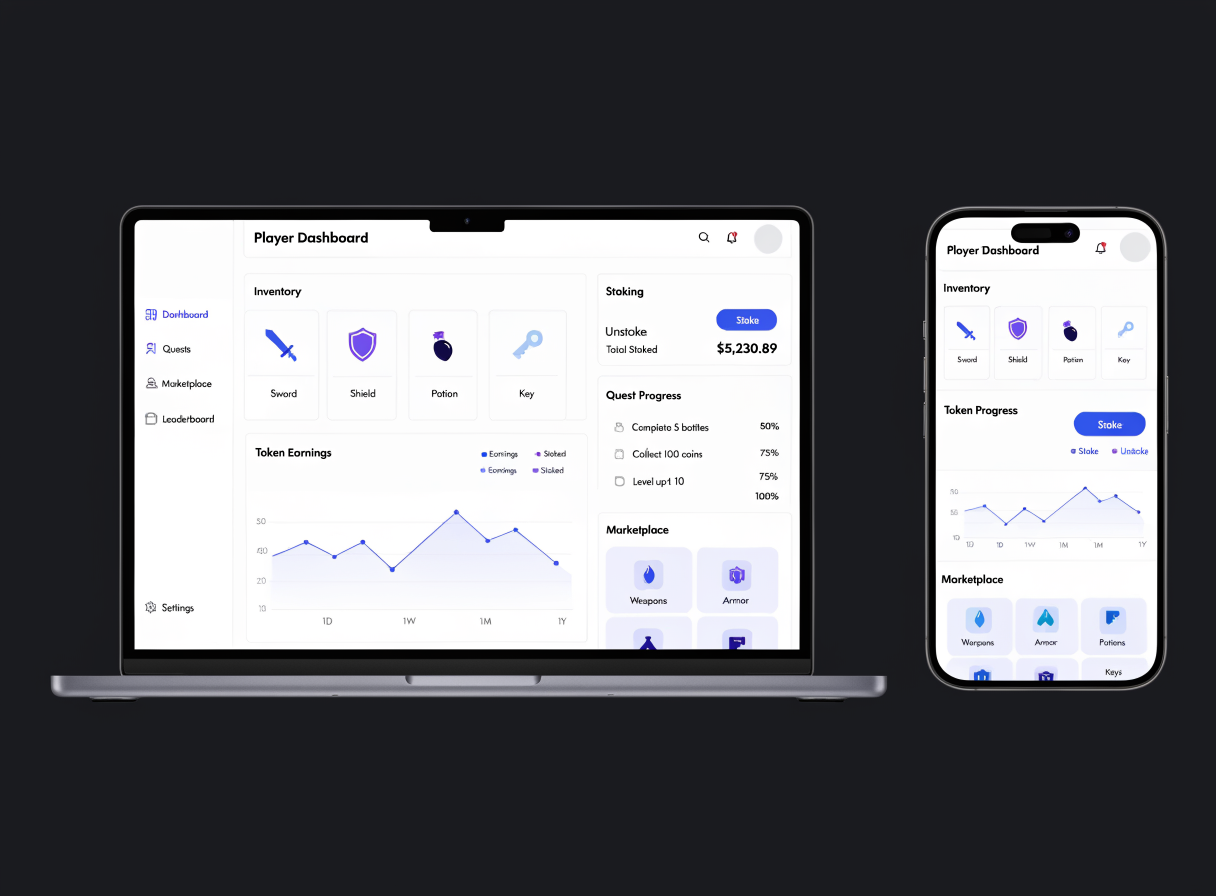
In prediction markets the resolution rule is the product; in game economies the sink is. Both are modelled against player growth before a contract is written.
Industries Our Blockchain Solutions Serve
Every vertical below maps to platforms we have actually shipped — not a capability slide.
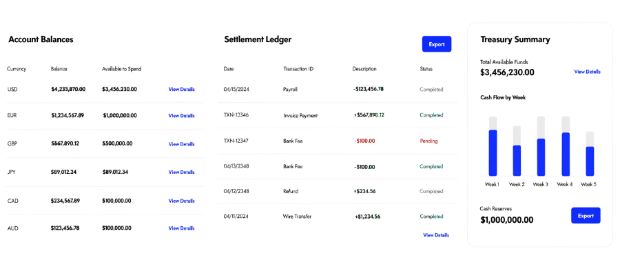
Fintech & banking
Custodial infrastructure, tokenized products and settlement rails built for examination.
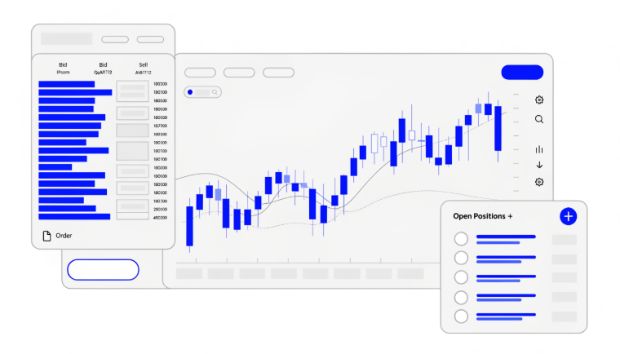
Trading & brokerage
Spot and derivatives exchanges, OTC desks and liquidity integration.
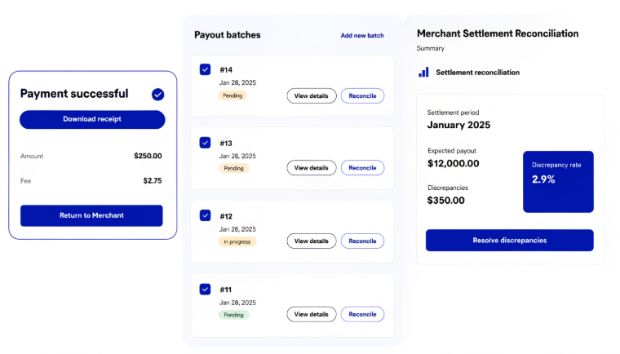
Payments & remittance
Crypto payment gateways, mass payouts and merchant settlement.
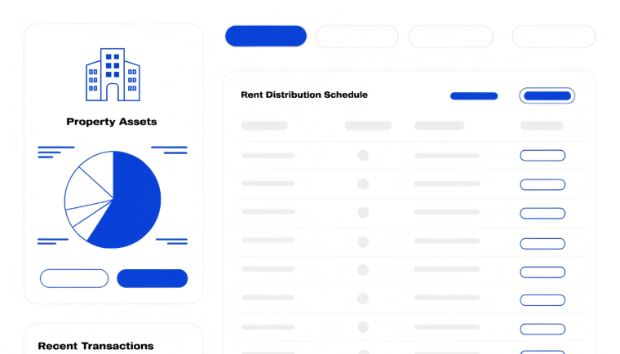
Real estate
SPV-aligned property tokenization with rent distribution automation.
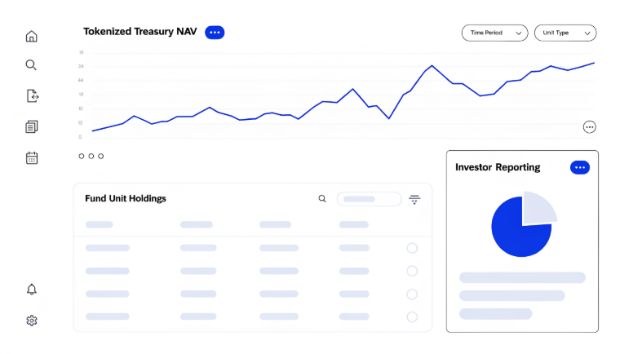
Funds & asset management
Tokenized treasuries, fund units and investor reporting.
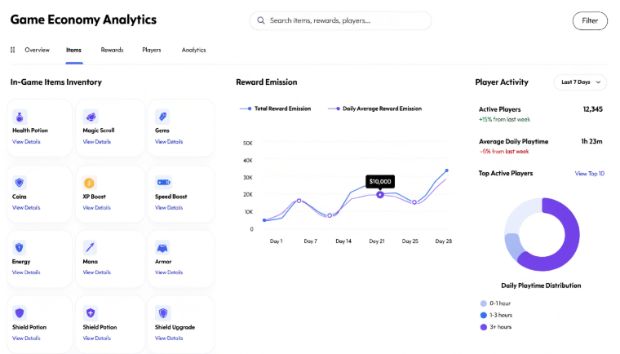
Gaming & esports
Game economies, NFT assets and prediction markets with modelled sinks.
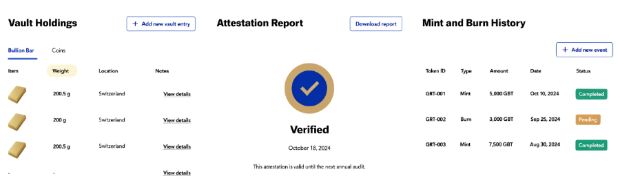
Commodities
Gold-backed tokens with attestation, proof of reserves and redemption.
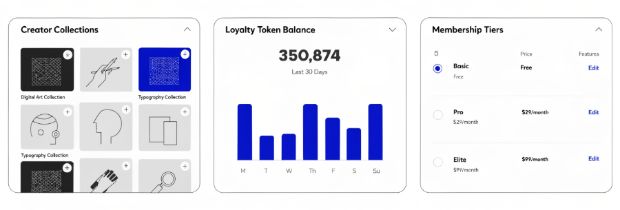
Media & communities
Creator marketplaces, loyalty tokens and gated membership.
Security, Audit and Compliance
Custody, key handling and regulatory scope are designed at architecture stage. Retrofitting any of the three after launch means rebuilding the parts that hold money.
Independent smart contract audit
Every value-holding path is reviewed by a third party, remediated and retested before mainnet. Contracts holding significant value get two audits plus a staged launch with deposit caps.
Tiered custody architecture
Hot, warm and cold tiers with withdrawal limits, address whitelisting and multi-approval on movement. A single-wallet platform is a single point of total loss.
Key management and signing
HSM or MPC signing, multisig treasury control, documented rotation and recovery. Deployer keys hand over to your own multisig, never ours.
KYC, AML and screening
Tiered verification, transaction monitoring, sanctions screening and travel rule support, implemented to what your counsel actually requires in each market.
Penetration testing
Application, API and infrastructure testing before go-live, with findings closed and retested. Platforms holding custody are attacked continuously from day one.
Monitoring and incident response
Anomaly alerting on balances, withdrawals and positions, plus written runbooks and a disclosure policy so a bad night has a procedure attached to it.
We do not hold or claim third-party certifications on your behalf. Where your market requires one, we build to its control requirements and support your audit.
Blockchain Platforms, Networks and Tech Stack
Chain choice follows the product: settlement cost, finality, liquidity and where your users already hold assets.
Networks
Languages and tooling
Platform and infrastructure
Everyone budgets for the build. Four other things decide whether you launch.
A platform can be built in weeks — that is genuinely the easy half, and it is the half most vendors sell. The businesses we work with stall after launch for reasons that were foreseeable before it, so we scope those first.
A blockchain development company should scope all four before quoting. We do, and we will tell you when one of them makes your timeline unrealistic.
Talk to an ArchitectSample Platform Architecture
A centralised exchange, drawn at the level we scope it. Wallets, marketplaces and tokenization platforms reuse the same layering with different core services.
Nothing outside this boundary moves funds. Every transfer passes multi-approval, withdrawal limits and address whitelisting.
Our Blockchain Development Process: Five Stages, Five Deliverables
No stage closes on a status update — each ends with something you can hold.
Products, markets, segments and commercial model
Licensing route and restrictions, with your counsel
Engines, contracts and apps, tested as we go
Independent review, remediation, retest
Deployment, liquidity, runbooks, training
Engagement Models: Three Ways to Work With Us
Fixed-scope build
A defined platform, quoted and delivered in the five stages above. Best when requirements are settled.
Get a scoped proposal →White label deployment
A proven platform configured to your brand, market and compliance rules — live in weeks, source included.
Configure a demo →Dedicated team
Hire blockchain developers as an extension of your team for ongoing product and protocol work.
Talk to an architect →Blockchain Development Cost: What Actually Drives the Range
We do not publish a price list, because the same product name covers builds an order of magnitude apart. These six factors decide where yours lands, and we quote against them after stage one.
White label deployments sit at the low end and launch in weeks. Custom platforms with custody, fiat and derivatives sit at the top and run months. Anyone quoting a firm number before scoping those six is guessing.
Get a Scoped QuoteCase Studies: What Delivery Looked Like
A members-only NFT marketplace for Digital Freemasonry
 Digital Free MasonryNFT marketplace · delivered and live
Next phase in progress: the ODFT Token and the MasonicVerse platform.
Working with Coinsclone has been one of the best professional experiences I have had in the blockchain industry.
From the very beginning of our NFT Marketplace project until its successful completion, the entire team demonstrated exceptional technical expertise, professionalism, patience, and commitment. Every stage of development was handled with great attention to detail, and every challenge we encountered was approached with a solution-oriented mindset.
Read the full client note
Our project was far from a standard NFT Marketplace. It included custom blockchain architecture, Polygon integration, ERC-721 and ERC-1155 standards, royalty implementation, token-gated access through Masonic Passport, multiple payment methods, marketplace customization, advanced testing, and many unique business requirements. Throughout the entire process, the team consistently delivered high-quality work while maintaining clear communication, transparency, and a strong commitment to excellence.
I would especially like to express my sincere appreciation to Mr. Jeeva, Mr. Bala, Mr. Saravanan, Mr. Veeramani, Mr. Akshay, and the entire development team for their outstanding support, professionalism, responsiveness, and dedication throughout the project. Their technical expertise, patience, and willingness to understand even the most complex business requirements gave us complete confidence during every phase of development.
What impressed me the most was not only their excellent blockchain development skills, but also their ability to understand our vision and transform it into a secure, scalable, and highly professional NFT Marketplace.
For me, Coinsclone is not simply a software development company — they are a trusted long-term technology partner. After successfully completing our NFT Marketplace, we are now preparing to continue our collaboration on the next major phase of the Digital Freemasonry ecosystem, including the development of the ODFT Token and the future MasonicVerse platform.
I highly recommend Coinsclone to anyone looking for a reliable, experienced, and highly professional blockchain development company. They have earned my complete trust and respect, and I sincerely look forward to working with them again on future projects.
Every review below is published on a platform that verifies the engagement independently. Read them there, not just here.
Client Reviews From Operators Who Launched With Us
Operators who launched with us, in their own words. Hover to pause.









Who Builds It
A named team is assigned at kickoff and stays through handover. These are the roles on a platform build, and what each one is accountable for.
Solution architect
Owns the architecture, the custody boundary and the scoping documents you keep at stage one.
Protocol engineers
Solidity and Rust contract work, invariant and fuzz test suites, gas and upgrade path decisions.
Backend and exchange engineers
Matching engines, ledgers, wallet services and the integrations that touch money.
Security engineers
Key management, penetration testing, audit remediation and the incident runbooks you inherit.
Compliance analysts
Translate your counsel's advice into verification tiers, product restrictions and reporting exports.
Product and QA
Flows, copy and adversarial testing — including the poor-network and failure cases users actually hit.
Insights
The arguments behind how we build, written out in full.
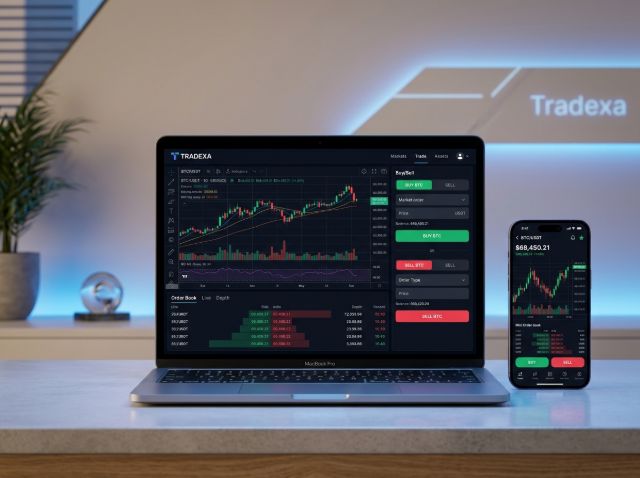 Exchanges
Why exchange liquidity has to be arranged before launch, not after
An empty order book converts almost nobody. Market maker agreements and aggregated liquidity belong in the launch plan, not the growth backlog.
Read the full article →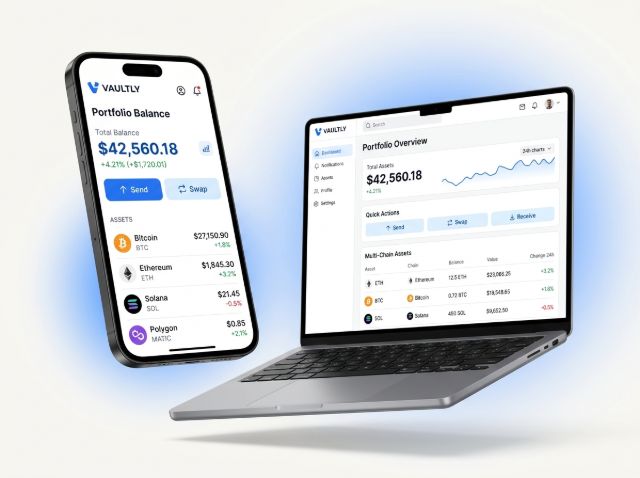 Custody
Hot, warm and cold: designing custody tiers that survive an incident
A single-wallet platform is a single point of total loss. How to size each tier, and which movements deserve four-eyes approval.
Read the full article →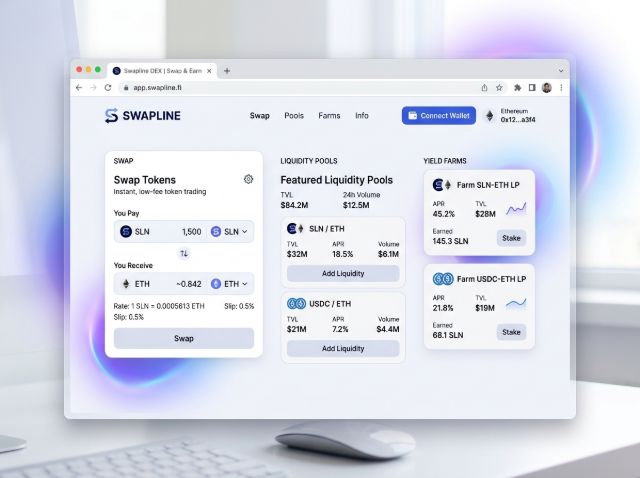 DeFi
DeFiMost DeFi exploits are economic, not technical
The largest losses came from contracts doing exactly what they were written to do. Modelling your protocol as an adversarial system instead.
Read the full article →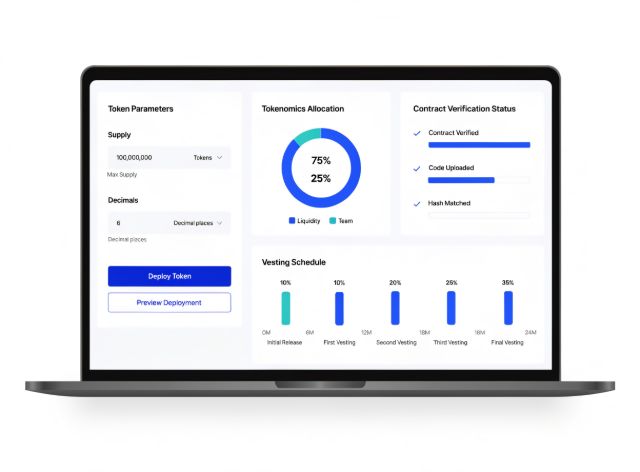 Tokens
Unlock schedules: modelling vesting against real liquidity depth
A cliff that releases more supply than the market can absorb is a price event you scheduled yourself, months in advance.
Read the full article →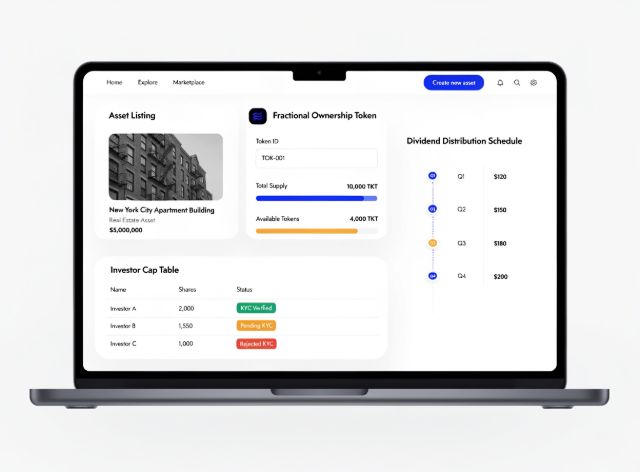 RWA
RWAThe chain cannot verify the asset
Attestation cadence, custody proof and a redemption path tested before launch — the parts of RWA tokenization that are not smart contract work.
Read the full article →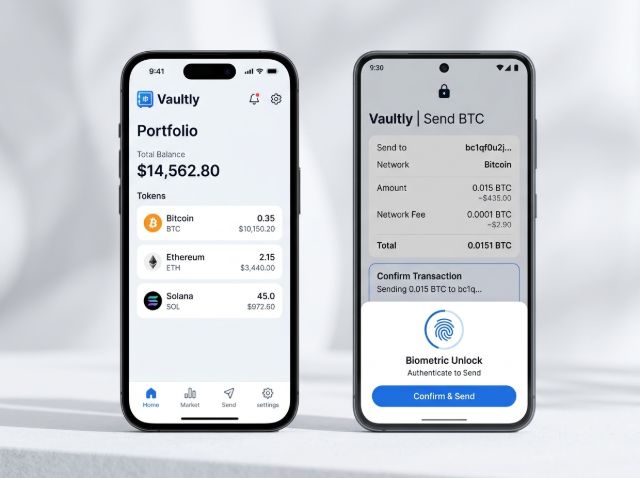 Mobile
Passing app store review with a crypto trading app
Both stores apply extra scrutiny to crypto. The disclosures, regional gating and design decisions that need to exist before you submit.
Read the full article →Hiring a Blockchain Development Company: FAQ
What kind of blockchain development company is Coinsclone?
A B2B blockchain development company: we build crypto platforms end to end — centralised and decentralised exchanges, custodial and non-custodial wallets, NFT marketplaces, payment gateways, prediction markets, GameFi economies, tokens and real-world asset tokenization platforms. Every engagement covers architecture, development, independent audit, launch and handover of the source code.
Do you provide blockchain consulting or a proof of concept first?
Yes. Stage one of every engagement is effectively blockchain consulting: product and market scoping, architecture and a compliance matrix, delivered as documents you keep whether or not you build with us. For unproven concepts we scope a proof of concept before committing to a full build.
How long does a platform take to build?
A white label build launches in four to eight weeks. A standard custom platform takes ten to sixteen weeks. Platforms with derivatives, full compliance stacks or multi-chain scope take five to nine months, and institutional-grade systems nine to fourteen. The variable is rarely engineering — it is licensing, banking and audit, all of which run on external timelines.
Do I own the source code?
Yes, in every engagement. Engines, smart contracts, applications, backend and infrastructure configuration transfer to you on delivery, deployed from addresses and accounts you control, with no ongoing licensing dependency on Coinsclone.
Is a clone script a copy of another company’s product?
No. You license working software with a proven architecture, configured to your branding, markets and commercial model. You do not receive another company’s brand, trademarks or proprietary interface, and we do not build lookalikes of a specific company’s design.
Do you handle security audits?
Yes. Every contract that holds value and every custody path goes through independent third-party review, followed by remediation and a retest before mainnet. For platforms holding significant value we recommend two audits plus invariant and fuzz testing, and a staged launch with exposure caps.
Can you help with licensing and compliance?
We are engineers, not lawyers, so your counsel determines the licensing route and what you may legally offer in each market. We then implement exactly what their advice requires: verification tiers, AML monitoring, travel rule data exchange, geo-fencing, product restriction and regulator reporting exports.
What about liquidity for an exchange?
It is arranged before launch, not after. That means market maker agreements, aggregated liquidity from other venues, or both. An exchange that opens with an empty order book converts almost no users, so we treat liquidity as a launch dependency rather than a growth task.
Which chains do you support?
Ethereum and every major EVM chain, plus Bitcoin, Solana, Tron, TON, Sui, Cosmos and app-specific chains such as Ronin and Immutable. Non-EVM chains are built as separate implementations because their account models, fee mechanics and signing differ substantially.
Do you build mobile apps?
Yes, native iOS and Android rather than wrapped web views. Trading and wallet apps need real market-data continuity, secure enclave key storage, device binding and biometric authentication, none of which a wrapper handles acceptably — and both app stores apply extra scrutiny to crypto apps.
How much does blockchain development cost?
It depends entirely on scope, and we do not publish figures because a white label wallet and an institutional derivatives venue are different orders of magnitude. Share your requirement and you receive a scoped proposal with the architecture and delivery phases the number is based on.
Will my idea stay confidential?
Yes. We sign an NDA before any technical discussion, and your concept, market strategy and commercial model are never used as reference material or shared with other clients.
What happens after launch?
You own and operate the platform, with runbooks and team training handed over as part of delivery. Ongoing maintenance, feature development and support are available as a separate arrangement, but they are optional — nothing in the handover locks you into it.
Can you work with our existing platform or codebase?
Yes. We take over existing platforms, extend them and rebuild the parts that are holding you back. The first step is a review of what you have: contracts, custody arrangement, data model and known incidents. Sometimes the honest recommendation is to keep more of it than you expected, and sometimes it is to replace the money-handling layer entirely.
White label or custom build — which should we choose?
White label if your model is close to a proven one and speed matters: a configured platform launches in four to six weeks with source included. Custom if your product, market or compliance position needs something the proven pattern does not do. The wrong reason to pick custom is wanting a different interface, which is a configuration job, not a rebuild.
Can we hire dedicated blockchain developers instead of a fixed-scope build?
Yes. A dedicated team works as an extension of yours on ongoing product and protocol work, with the same architect and engineers assigned rather than rotated. It suits companies with an internal roadmap and their own product management; a fixed-scope build suits a defined platform with a launch date.
Which industries do you build for?
Fintech and banking, trading and brokerage, payments and remittance, real estate, funds and asset management, gaming and esports, commodities, and media and community businesses. Each maps to platforms we have shipped rather than a capability we could attempt.
How is the project managed and how often will we hear from you?
A named architect and project manager stay with you from kickoff to handover. You get a weekly written update, access to the staging environment as it is built and a demo at the close of each of the five stages. Nothing is reported as complete without something you can open and use.
What do we actually receive at handover?
Source code for every component, deployment scripts and infrastructure configuration, the audit report with remediation, admin and treasury runbooks, incident procedures, API documentation and training for your team. Contracts deploy under your keys and governance, with no licensing dependency on us.
Start Your Project
Tell us what you are building and we will respond with a scoped proposal covering architecture, compliance, delivery phases and timeline.
- Working demo of a comparable platform with your branding
- Architecture and compliance requirements mapped to your market
- NDA signed before technical discussion
Request received
A solution architect will reply within one business day with a scoped proposal and demo link.
Tell us what you are building
Share your product, market and timeline. Your team gets back scope, architecture, compliance requirements, delivery phases and what each stage hands you — with an NDA signed first.